Cookout Nutrition Guide: Calories, Macros & Healthy Picks 2026
If you’ve ever struggled to find reliable nutrition facts before ordering, this Cookout nutrition guide is designed to help. Since Cookout doesn’t provide a detailed nutrition menu, calorie calculator, or allergen chart, many customers are left relying on inconsistent third-party information.
This comprehensive Cookout nutrition guide brings everything together in one place, including calorie breakdowns, protein and fat comparisons, sodium information, gluten guidance, and practical meal-building tips. Whether your goal is weight management, muscle building, or making informed food choices, you’ll find the information you need before placing your order.
Why Cookout Nutrition Information Is Hard to Find
Before reviewing the Cookout Nutrition guide that facts, it’s important to understand why Cookout nutrition information is difficult to find. Although federal law requires large restaurant chains to make calorie information available, Cookout does not prominently display detailed nutrition data or provide a comprehensive online Cookout Nutrition guide resource.
Instead, most available information comes from third-party databases, customer reports, and ingredient-based estimates. This guide combines and cross-checks those sources to provide the most accurate Cookout Nutrition guide, information currently available, while noting that the figures are estimates rather than official laboratory-certified values.
Link FROM this Pillar TO all Cluster 3 posts:
Cookout Burger Nutrition: Complete Breakdown
The Cookout nutrition guide shows that the burger menu offers the widest calorie range on the menu, starting at around 350 calories and exceeding 600 calories depending on the burger style, toppings, and customizations you choose.
Calories by Burger Style
| Burger Style | Estimated Calories | Estimated Protein | Estimated Fat |
| Regular Hamburger | 350 – 380 | 20 – 24g | 16 – 19g |
| Cookout Style Hamburger | 400 – 440 | 22 – 26g | 20 – 24g |
| House Style Hamburger | 420 – 460 | 21 – 25g | 22 – 26g |
| Cheddar Style Hamburger | 450 – 490 | 24 – 28g | 25 – 29g |
| Out West Style Hamburger | 480 – 520 | 24 – 28g | 27 – 31g |
| Steak Style Hamburger | 500 – 550 | 25 – 29g | 29 – 34g |
| Nacho Chili Style Hamburger | 560 – 620 | 26 – 30g | 32 – 38g |
The pattern here is consistent: each additional topping category — cheese, sauce, chili, sautéed vegetables — adds both calories and fat without a proportional increase in protein. The base patty and bun contribute the majority of the protein across every style, while the toppings are what separate the lightest option from the heaviest.
What Drives the Calorie Differences
Understanding what’s actually adding calories helps you make smarter substitutions regardless of which burger style you prefer.
Mayo
Mayo adds approximately 90 to 100 calories per tablespoon and appears standard on the House Style build. Requesting it on the side or removed saves this calorie load without changing anything else about the sandwich.
Cheese
Cheese adds approximately 50 to 80 calories per slice depending on thickness. This is a modest addition relative to other toppings, making cheese a reasonable indulgence if you’re managing calories elsewhere in your order.
BBQ sauce
BBQ sauce on the Out West Style contributes approximately 40 to 70 calories per serving — less than most people expect, since the calorie load comes primarily from sugar content rather than fat.
House chili and nacho cheese sauce
House chili and nacho cheese sauce on the Nacho Chili Style are the two heaviest topping additions on the entire burger menu, together contributing 200 to 270 calories on top of the base burger.
Burger Sodium Content
Sodium is worth calling out specifically here, because it’s the nutritional factor most other guides overlook entirely.
| Burger Style | Estimated Sodium |
| Regular Hamburger | 650 – 750 mg |
| Cookout Style Hamburger | 850 – 950 mg |
| House Style Hamburger | 800 – 900 mg |
| Cheddar Style Hamburger | 950 – 1,050 mg |
| Out West Style Hamburger | 1,050 – 1,200 mg |
| Steak Style Hamburger | 1,100 – 1,250 mg |
| Nacho Chili Style Hamburger | 1,400 – 1,600 mg |
For context, the FDA’s recommended daily sodium limit is 2,300 mg. The Nacho Chili Style Hamburger alone consumes more than half that limit before you’ve even added sides or a drink. This is one of the most important pieces of information in this entire Cookout nutrition guide for anyone managing blood pressure or sodium intake specifically.
Cookout Nutrition guide Chicken: Complete Breakdown
Chicken options at Cookout consistently offer a better protein-to-calorie ratio than the burger menu, making them the go-to category for anyone prioritizing lean protein.
| Chicken Item | Estimated Calories | Estimated Protein | Estimated Fat |
| Grilled Chicken Sandwich | 380 – 420 | 28 – 32g | 12 – 16g |
| Fried Chicken Sandwich | 490 – 540 | 24 – 28g | 24 – 28g |
| Chicken Tenders (3 piece) | 420 – 480 | 30 – 36g | 20 – 24g |
The grilled chicken sandwich stands out clearly here — it offers the highest protein-per-calorie ratio of any main item on the entire Cookout menu, while also having the lowest fat content among the chicken options. The fried version isn’t a bad choice, but it comes with roughly 100 more calories and double the fat for a similar protein contribution.
Chicken tenders provide the highest absolute protein number on the menu, making them the top choice if total protein grams matter more to you than the calorie-efficiency ratio.
Cookout Nutrition guide Hot Dog and Corn Dog
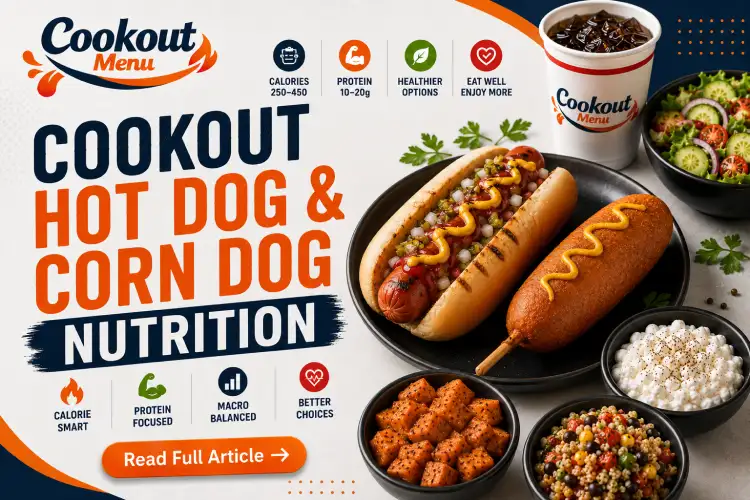
These two items are consistently the lowest-calorie main options on the Cookout menu, though they come with a meaningful trade-off in protein content.
| Item | Estimated Calories | Estimated Protein | Estimated Fat |
| Regular Hot Dog | 280 – 320 | 10 – 12g | 18 – 22g |
| Corn Dog | 220 – 260 | 6 – 8g | 12 – 16g |
The corn dog is the single lowest-calorie main item on the entire Cookout menu. If pure calorie minimization is your only goal, this is technically your best option — though the low protein content means it doesn’t do much work toward a protein-focused eating pattern.
The hot dog sits in a useful middle position: lower calories than any burger, more protein than the corn dog, and enough flexibility in sides and drink choices to build a genuinely light complete Tray around it.
Cookout Sides: Complete Cookout Nutrition guide Comparison
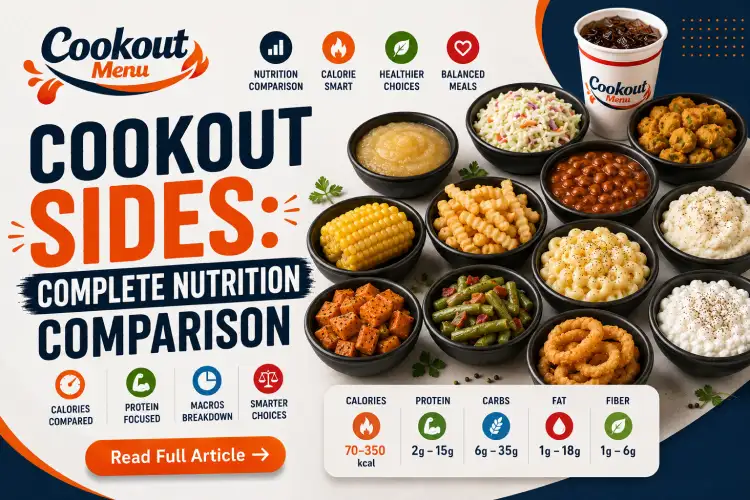
The two sides included in every Cookout Tray have as much impact on your total nutrition as the main item choice — sometimes more, given how wide the calorie range is across the available options.
| Side | Estimated Calories | Estimated Protein | Estimated Fiber |
| Side Salad (no dressing) | 30 – 50 | 1 – 2g | 1 – 2g |
| Baked Beans | 170 – 200 | 7 – 9g | 6 – 8g |
| Coleslaw | 180 – 220 | 1 – 2g | 1 – 2g |
| Hush Puppies (4–5 pieces) | 260 – 300 | 4 – 5g | 1 – 2g |
| Mac and Cheese | 300 – 340 | 9 – 11g | 0.5 – 1g |
| French Fries (regular) | 320 – 360 | 3 – 4g | 2 – 3g |
| Onion Rings (regular) | 380 – 420 | 4 – 5g | 1 – 2g |
Two things stand out clearly in this comparison. First, baked beans offer by far the best overall nutritional profile among Cookout sides — meaningful protein, the highest fiber content on the list, and a moderate calorie count. Second, the side salad is the clear choice if minimizing calories is the single priority, though it offers almost nothing else nutritionally beyond that.
Mac and cheese is worth a specific mention because its protein content (9 to 11 grams from the cheese and milk components) is higher than most people expect, though its fiber content is essentially negligible.
Side Sodium Content
| Side | Estimated Sodium |
| Side Salad (no dressing) | 15 – 30 mg |
| Coleslaw | 250 – 320 mg |
| Baked Beans | 480 – 560 mg |
| Hush Puppies | 380 – 450 mg |
| Mac and Cheese | 620 – 720 mg |
| French Fries | 280 – 350 mg |
| Onion Rings | 420 – 500 mg |
Mac and cheese carries the highest sodium load among sides, followed by baked beans. If you’re specifically managing sodium and choosing baked beans for its protein and fiber benefits, be aware that it’s not a low-sodium option despite its other nutritional strengths.
Cookout Nutrition guide Drink and Milkshake
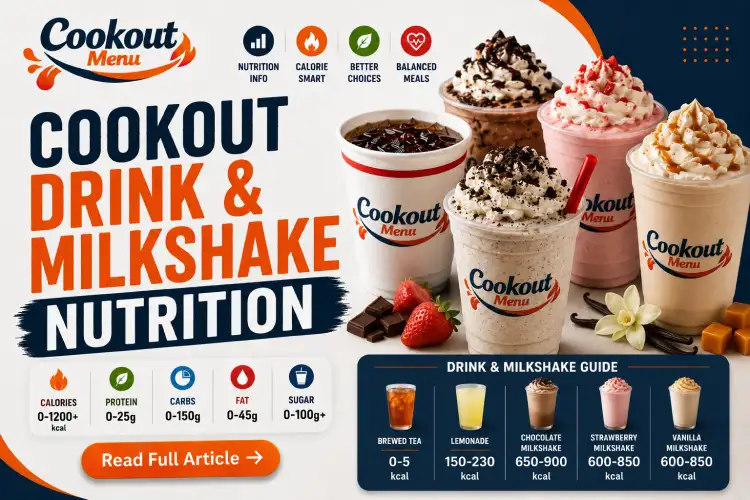
The drink component of your Tray can range from zero calories to over 700, making it one of the most impactful — and most overlooked — decisions in the entire meal.
Standard Drinks
| Drink | Estimated Calories |
| Water | 0 |
| Unsweetened Iced Tea | 0 – 5 |
| Diet Soda | 0 – 10 |
| Regular Fountain Soda | 150 – 250 |
| Sweet Tea (large) | 200 – 280 |
| Lemonade | 200 – 260 |
Milkshake Calories by Flavor
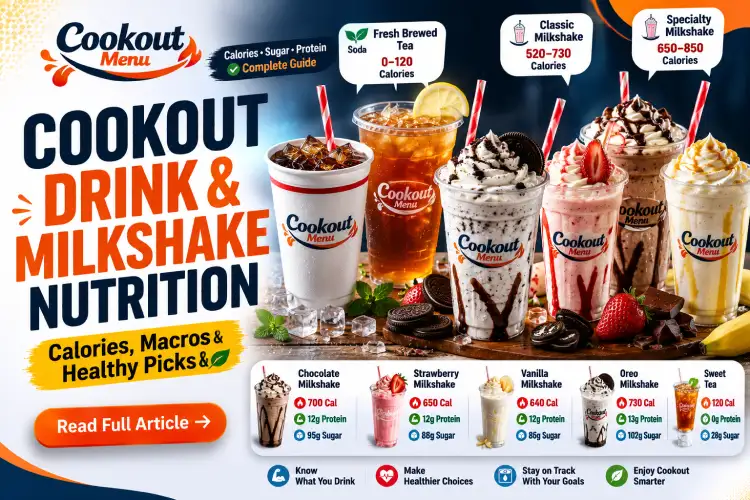
| Flavor | Estimated Calories (Regular) |
| Lemon Cheesecake | 490 – 560 |
| Peach (seasonal) | 490 – 540 |
| Vanilla | 500 – 560 |
| Strawberry | 510 – 570 |
| Chocolate | 520 – 580 |
| Mint Chocolate Chip | 520 – 580 |
| Strawberry Cheesecake | 530 – 600 |
| Cheerwine (NC exclusive) | 540 – 600 |
| Banana Pudding | 580 – 640 |
| Caramel Fudge | 580 – 650 |
| Oreo Cheesecake | 620 – 700 |
| Peanut Butter Fudge | 650 – 730 |
Your drink choice has one of the biggest impacts on your Cookout Tray calories. Water adds 0 calories, while a Peanut Butter Fudge Milkshake can reach 730 calories—a larger difference than the calorie gap between the lightest and heaviest burgers. Although Cookout milkshakes provide 8–12 grams of protein, their protein-to-calorie ratio is low, so it’s best to enjoy them as a flavorful treat rather than a meaningful source of nutrition.
Complete Tray Nutrition: Real Examples
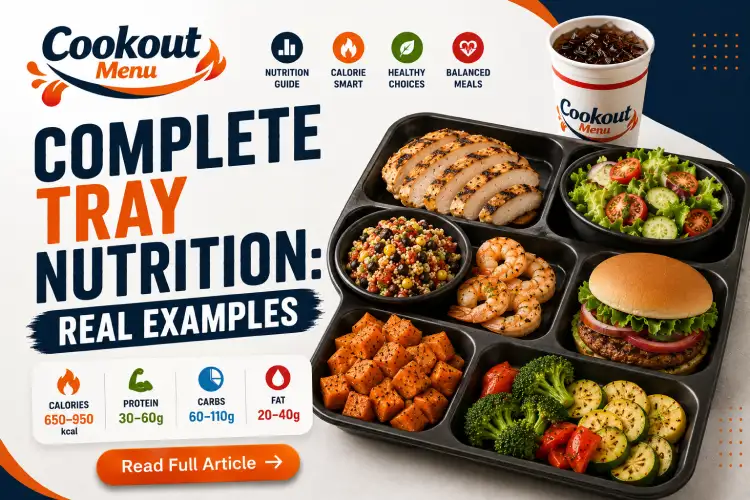
Bringing everything together, here’s how five realistic Cookout Tray combinations stack up across all the major nutrition categories.
The Lightest Possible Tray
Grilled Chicken Sandwich + Side Salad (no dressing) + Baked Beans + Unsweetened Tea
| Metric | Total |
| Calories | 580 – 670 |
| Protein | 36 – 43g |
| Fat | 14 – 18g |
| Sodium | 1,400 – 1,650 mg |
The Balanced Tray
Cookout Style Hamburger + Coleslaw + Baked Beans + Unsweetened Tea
| Metric | Total |
| Calories | 770 – 870 |
| Protein | 30 – 37g |
| Fat | 32 – 38g |
| Sodium | 1,800 – 2,050 mg |
The High-Protein Tray
Chicken Tenders (3 piece) + Baked Beans + Coleslaw + Unsweetened Tea
| Metric | Total |
| Calories | 870 – 1,000 |
| Protein | 38 – 47g |
| Fat | 36 – 42g |
| Sodium | 1,950 – 2,200 mg |
The Shake Upgrade Tray
House Style Hamburger + French Fries + Coleslaw + Vanilla Milkshake
| Metric | Total |
| Calories | 1,300 – 1,450 |
| Protein | 27 – 32g |
| Fat | 60 – 72g |
| Sodium | 2,100 – 2,400 mg |
The Most Indulgent Tray
Nacho Chili Burger + Onion Rings + Mac and Cheese + Peanut Butter Fudge Shake
| Metric | Total |
| Calories | 1,800 – 2,050 |
| Protein | 48 – 58g |
| Fat | 95 – 115g |
| Sodium | 2,750 – 3,100 mg |
The range across these five examples — from 580 calories to over 2,000 — demonstrates exactly why “is Cookout healthy” doesn’t have a single answer. The format is neutral. The specific choices within it determine everything.
Cookout Nutrition guide: Cookout and Dietary Restrictions
Gluten Considerations
According to this Cookout nutrition guide, Cookout does not offer a certified gluten-free menu, and the use of shared fryers and kitchen equipment creates a significant cross-contamination risk, especially for breaded items. Lower-risk choices include a plain burger patty without the bun, grilled chicken, coleslaw, baked beans, and a plain side salad, but none can be guaranteed gluten-free. If you have celiac disease, this Cookout nutrition guide recommends speaking directly with the staff before ordering and exercising extra caution.
Vegetarian Considerations
Cookout’s menu is heavily meat-focused, and vegetarian main options are genuinely limited. The side salad, coleslaw, baked beans (verify preparation, as some recipes include bacon or meat-based seasoning), and hush puppies are the primary vegetarian-friendly items available. There is no dedicated plant-based main item on the standard menu at most locations.
Low-Sodium Considerations
Sodium is the most consistent nutritional weakness across the entire Cookout menu. Even the lightest possible Tray build exceeds 1,400 mg of sodium — well over half the daily recommended limit. Anyone specifically managing sodium intake for blood pressure or other health reasons should prioritize the regular hamburger or grilled chicken sandwich, side salad, and avoid chili, nacho cheese, and mac and cheese, which carry the highest sodium loads on the menu.
How to Build Your Cookout Tray Based on Your Goal
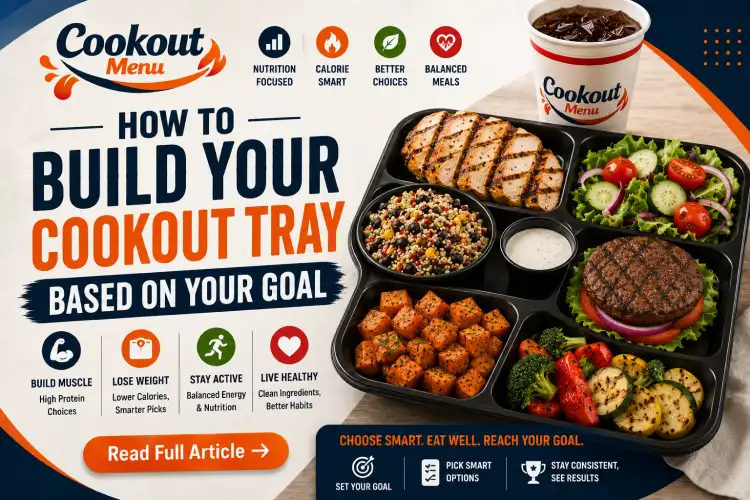
Different nutritional priorities call for different ordering strategies. Here’s a practical framework organized by common goals.
If Your Goal Is Weight Management
Choose the grilled chicken sandwich or a regular hamburger as your main. Pair a side salad with baked beans or coleslaw. Order water or unsweetened tea. This combination consistently lands in the 560 to 750 calorie range while still delivering a satisfying, complete meal.
If Your Goal Is Muscle Building or High Protein
Choose chicken tenders or the grilled chicken sandwich as your main. Always include baked beans as one of your two sides — it’s the only side that meaningfully contributes protein. This combination can deliver 36 to 47 grams of protein in a single Tray.
If Your Goal Is Managing Sodium
Choose the regular hamburger or grilled chicken sandwich. Avoid chili, nacho cheese, mac and cheese, and heavily sauced burger styles. Choose a side salad over coleslaw or baked beans if sodium is your primary concern, since it carries the lowest sodium load of any side option.
If Your Goal Is an Occasional Indulgence
This is where the Nacho Chili burger, onion rings, mac and cheese, and a specialty milkshake genuinely make sense. Treat this as a deliberate, occasional choice rather than a default — the nutritional profile is significantly heavier across every category, and that’s fine within the context of an occasional treat rather than a regular pattern.
Comparing Cookout Nutrition guide to Other Fast Food Chains
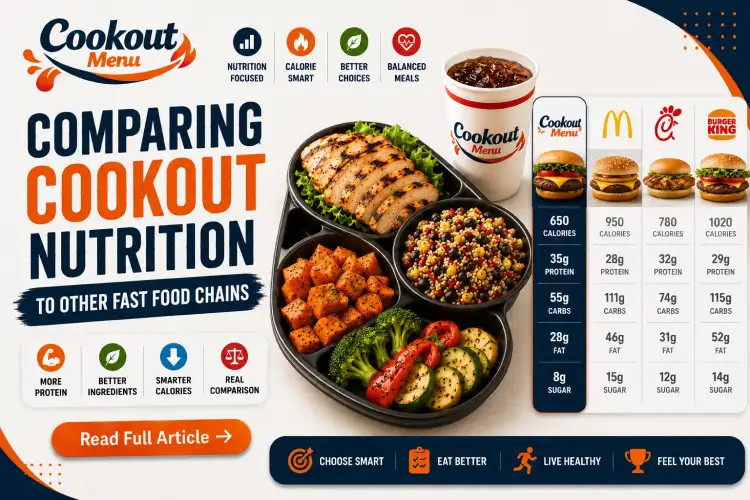
Context helps here. How does Cookout’s nutritional profile compare to what you’d find at other major fast food chains for a similar meal?
| Chain | Comparable Meal | Approx. Calories | Approx. Sodium |
| Cookout | Tray (Cookout Style burger, fries, coleslaw, sweet tea) | 1,180 – 1,350 | 2,250 – 2,500 mg |
| McDonald’s | Big Mac Meal (medium) | 1,090 – 1,200 | 1,900 – 2,100 mg |
| Chick-fil-A | Chicken Sandwich Meal (medium) | 970 – 1,100 | 1,700 – 1,900 mg |
| Wendy’s | Dave’s Single Meal (medium) | 1,050 – 1,180 | 1,850 – 2,050 mg |
Cookout’s default Tray build sits roughly in line with or slightly above comparable meals at major competitors — not dramatically worse, but not better either.
The key differentiator is the flexibility built into the Tray format itself: unlike a fixed combo meal at most other chains, Cookout gives you enough side and main options to meaningfully move that number in either direction based on your choices.
Frequently Asked Questions
Does Cookout publish official nutrition information?
Cookout does not prominently display calorie or macro information on their menu boards or website. The figures available online, including in this guide, are compiled from third-party nutritional databases and verified customer reports rather than official company disclosure.
What is the lowest calorie meal at Cookout?
A Tray built with a grilled chicken sandwich, a side salad without dressing, baked beans, and unsweetened tea comes in at approximately 580 to 670 calories — the lightest complete meal achievable within the standard Tray format.
What is the highest protein item at Cookout?
Chicken tenders (3 piece) provide the most total protein at approximately 30 to 36 grams. The grilled chicken sandwich offers the best protein-to-calorie ratio at approximately 28 to 32 grams for fewer overall calories.
Is Cookout high in sodium?
Yes. Sodium is the most consistent nutritional weakness across the entire menu. Even the lightest Tray builds exceed 1,400 mg, and the heaviest builds can approach or exceed the full daily recommended limit of 2,300 mg in a single meal.
Does Cookout have gluten-free options?
Cookout does not offer a certified gluten-free menu. Some items are lower in gluten-containing ingredients, but shared kitchen equipment and fryer oil create cross-contamination risks that make the menu difficult to navigate safely for anyone with celiac disease.
Can I eat healthy at Cookout?
Yes, within reasonable limits for fast food. Choosing a grilled chicken sandwich or lean burger, pairing it with baked beans or a side salad, and choosing a zero-calorie drink can produce a genuinely balanced meal under 700 calories.
How does Cookout nutrition compare to other fast food chains?
Cookout’s default Tray order is roughly comparable to similar meals at McDonald’s, Chick-fil-A, and Wendy’s in terms of calories and sodium. The main advantage at Cookout is the flexibility of the Tray format, which allows for meaningfully lighter builds than a fixed combo meal at most competitors.
What are the healthiest sides at Cookout?
Baked beans offer the best overall nutritional profile among Cookout sides, providing meaningful protein and the highest fiber content. The side salad is the lowest-calorie option if minimizing calories is the priority.
Final Thoughts
This Cookout nutrition guide brings together the information you need to make smarter menu choices based on your goals. Whether you’re focused on weight management, protein intake, sodium control, or balanced eating, understanding the nutrition facts helps you order with confidence instead of guessing.
The biggest takeaway is that the Cookout Tray is neither inherently healthy nor unhealthy—your choices determine the outcome. A Tray with grilled chicken, baked beans, and unsweetened tea can fit into a balanced diet, while a Nacho Chili Burger, onion rings, and a Peanut Butter Fudge Shake is better enjoyed as an occasional treat. Use this Cookout nutrition guide whenever you order to build the meal that best fits your needs.