
Is the Cookout Tray Healthy? Full Nutrition Breakdown 2026
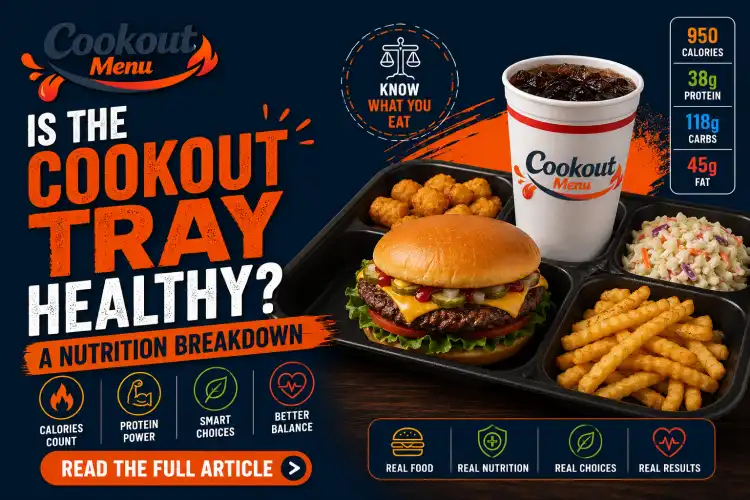
If you’ve ever wondered is the Cookout Tray healthy, the answer depends entirely on what you order. While some trays can be high in calories, others can be surprisingly balanced with the right combination of mains, sides, and drinks.
This guide breaks down is the Cookout Tray healthy with real nutrition insights, showing how different choices affect your meal. You’ll learn which items are the healthiest, where extra calories come from, and how to build a balanced Cookout Tray that fits your goals.
The Honest Starting Point
The Cookout Tray is designed to deliver value and variety, not necessarily the healthiest meal. That’s why the answer to is the Cookout Tray healthy depends on the main item, sides, and drink you choose rather than the Tray itself.
The good news is that the Tray is highly customizable, giving you control over its nutrition. By selecting lighter mains, smarter sides, and lower-calorie drinks, you can build a meal that is much more balanced than a typical fast-food combo.
Link FROM this post TO:
The Nutritional Range: Best Case to Worst Case
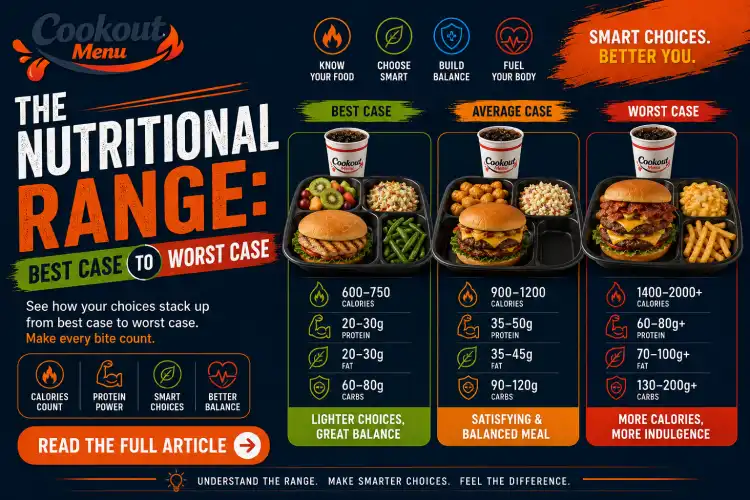
To understand the real answer to “is the Cookout Tray healthy,” it helps to see the full range of what’s possible within the same meal format.
The Lightest Possible Tray
Grilled Chicken Sandwich + Side Salad (no dressing) + Baked Beans + Unsweetened Tea
Calories: 560 – 670
Protein: approximately 35 – 40 grams
Fat: approximately 14 – 18 grams
Sodium: approximately 1,400 – 1,700 mg
This build sits comfortably within what most nutrition guidelines would consider a reasonable single meal for an average adult. The protein content is solid. The calorie count fits within typical meal-based targets for weight maintenance or moderate weight loss. The primary nutritional weakness is sodium, which runs on the higher side — a common characteristic of restaurant food generally, not something specific to Cookout.
The Most Indulgent Possible Tray
Nacho Chili Style Hamburger + Onion Rings + Mac and Cheese + Banana Pudding Milkshake
Calories: 1,700 – 1,900
Protein: approximately 45 – 55 grams
Fat: approximately 85 – 100 grams
Sodium: approximately 2,600 – 3,000 mg
This build represents nearly the entire recommended daily calorie intake for many adults in a single meal, along with sodium levels that approach or exceed the full daily recommended limit of 2,300 mg. This is unambiguously an indulgent meal — appropriate as an occasional treat, not as a regular dietary pattern.
The Middle Ground Tray
Cookout Style Hamburger + Coleslaw + Baked Beans + Unsweetened Tea
Calories: 770 – 870
Protein: approximately 25 – 30 grams
Fat: approximately 35 – 42 grams
Sodium: approximately 1,800 – 2,100 mg
This is likely the most representative “typical” Cookout Tray order for most customers — a real burger, two reasonable sides, no shake upgrade. It sits at a calorie level that fits within a normal daily intake without requiring significant adjustment to the rest of the day’s eating, though sodium remains elevated as it does across the entire range.
Breaking Down the Nutritional Components
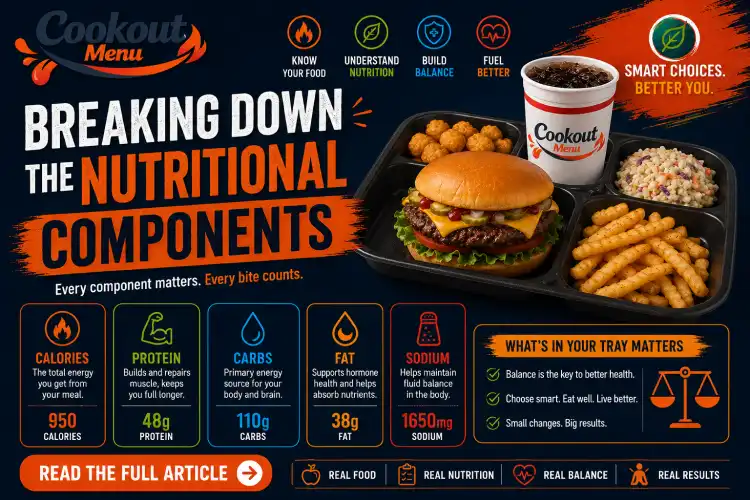
Understanding is the Cookout Tray healthy requires looking beyond just calories. Here’s how the other major nutritional factors play out.
Protein Content
Protein is genuinely one of the stronger nutritional aspects of the Cookout Tray format. Nearly every main item option provides a meaningful protein contribution:
| Main Item | Estimated Protein |
| Grilled Chicken Sandwich | 28 – 32g |
| Chicken Tenders (3 piece) | 30 – 36g |
| Regular Hamburger | 20 – 24g |
| Cookout Style Hamburger | 22 – 26g |
| Fried Chicken Sandwich | 24 – 28g |
| Hot Dog | 10 – 12g |
| Corn Dog | 6 – 8g |
For context, general nutrition guidelines often suggest 20 to 35 grams of protein per meal for most adults as a reasonable target. Most Cookout main items fall within or close to that range, with the grilled chicken sandwich and chicken tenders providing the strongest protein contribution.
Fat Content
Fat content is the biggest factor separating the lightest and heaviest Cookout Trays. A grilled chicken sandwich contains far less fat than a Nacho Chili Style Hamburger, while fried sides and milkshakes can quickly add another 20–30 grams of fat, making your overall meal much richer.
Sodium Content
Sodium is the biggest nutritional concern across nearly every Cookout Tray. Even lighter meals typically provide 1,400–1,700 mg of sodium, while heavier trays with chili, nacho cheese, and processed meats can approach or exceed the recommended daily limit, making sodium the key nutrient to watch if you’re managing your intake.
Link FROM this post TO:
Micronutrients: What’s Missing
One nutritional limitation of the Cookout Tray is its relatively low amount of vitamins, minerals, and fiber. While a side salad, coleslaw, or baked beans can provide some beneficial nutrients, most Tray combinations contain only modest amounts of fruits and vegetables.
Among the side options, baked beans offer the most fiber, iron, and potassium, making them the strongest nutritional choice. For a more balanced diet, it’s best to enjoy a Cookout Tray as part of a day that also includes plenty of fruits, vegetables, and whole grains.
How Is the Cookout Tray Healthy Compares to Registered Dietitian Guidelines
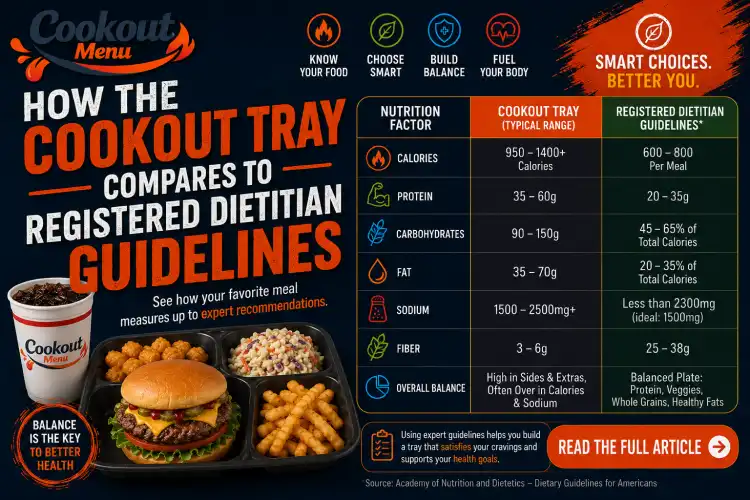
Nutrition professionals typically assess meals based on calories, protein, fat, and sodium. Lighter Cookout Tray combinations generally provide good protein and a reasonable calorie range, but sodium remains the biggest nutritional concern across most meal options.
Heavier Tray combinations are better suited as an occasional treat rather than an everyday meal. The advantage of the Cookout Tray is its flexibility—you can choose lighter mains, healthier sides, and lower-calorie drinks to create a more balanced fast-food meal.
Building a Genuinely Balanced Cookout Tray
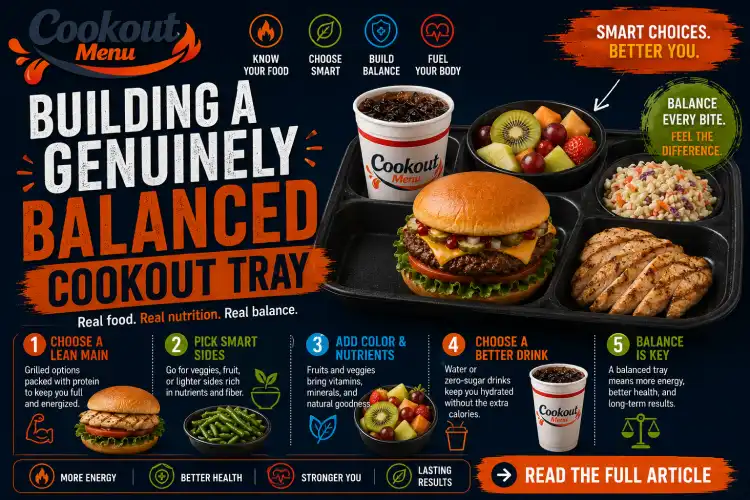
Based on everything above, here’s a practical framework for building a Cookout Tray that leans toward the healthier end of the spectrum without feeling like a compromise.
Choose a lean protein main.
Grilled chicken sandwich or chicken tenders provide the best protein-to-calorie ratio among Cookout main options.
Pick one lighter side and one moderate side.
Pairing a side salad or coleslaw with baked beans gives you fiber, some protein, and controlled calories without going to the extreme of two plain salads.
Skip or minimize high-sodium add-ons.
Chili, nacho cheese sauce, and extra cheese all add meaningful sodium on top of an already sodium-heavy base. Simple condiments keep the sodium increase minimal.
Choose a zero-calorie drink.
Water or unsweetened tea removes a significant calorie and sugar contribution without any nutritional downside.
Save the milkshake for when you actually want it.
If you’re specifically trying to build a healthier Tray, skipping the shake upgrade is the single highest-impact decision. If you do want the shake, choosing a lighter flavor like lemon cheesecake or vanilla keeps the addition more moderate.
Frequently Asked Questions
Is the Cookout Tray healthy?
Is the Cookout Tray Healthy? It depends entirely on your choices. A Tray built with grilled chicken, a side salad, baked beans, and unsweetened tea comes in around 560 to 670 calories with solid protein content — a reasonably balanced fast food meal. A Tray built with a Nacho Chili burger, onion rings, mac and cheese, and a milkshake exceeds 1,800 calories with very high fat and sodium content.
What is the healthiest way to order a Cookout Tray?
Choose a grilled chicken sandwich or chicken tenders as your main, pair a side salad or coleslaw with baked beans, and order water or unsweetened tea as your drink. This combination provides solid protein with a controlled calorie and fat profile.
How much sodium is in a Cookout Tray?
Sodium content ranges from approximately 1,400 mg in the lightest Tray builds to over 2,800 mg in the heaviest builds. Even the lightest options represent more than half the FDA’s recommended daily sodium limit in a single meal.
Does the Cookout Tray have enough protein?
Yes, generally. Most Cookout main items provide between 20 and 36 grams of protein, which falls within or near typical single-meal protein recommendations for most adults.
What is the biggest nutritional weakness of the Cookout Tray?
Sodium is the most consistent nutritional weakness across every possible Tray build. Fat content is also a significant factor in the heavier burger styles and fried sides.
Can I eat a Cookout Tray regularly and stay healthy?
A thoughtfully built lighter Tray — grilled chicken, a salad or coleslaw side, baked beans, and a zero-calorie drink — can fit reasonably into a regular eating pattern for most people. The heaviest Tray builds are better suited to occasional consumption rather than a daily or frequent pattern.
Final Thoughts
Is the Cookout Tray healthy? The answer is yes—it can be, depending on the main item, sides, and drink you choose. A well-planned Tray can provide good protein and a reasonable calorie range, though sodium remains the biggest nutritional concern.
The Cookout Tray isn’t marketed as health food, but it also doesn’t have to be an unhealthy meal. By understanding the nutrition facts and making smarter choices, you can enjoy a balanced Cookout Tray that fits your dietary goals without giving up the foods you enjoy.




One Comment